
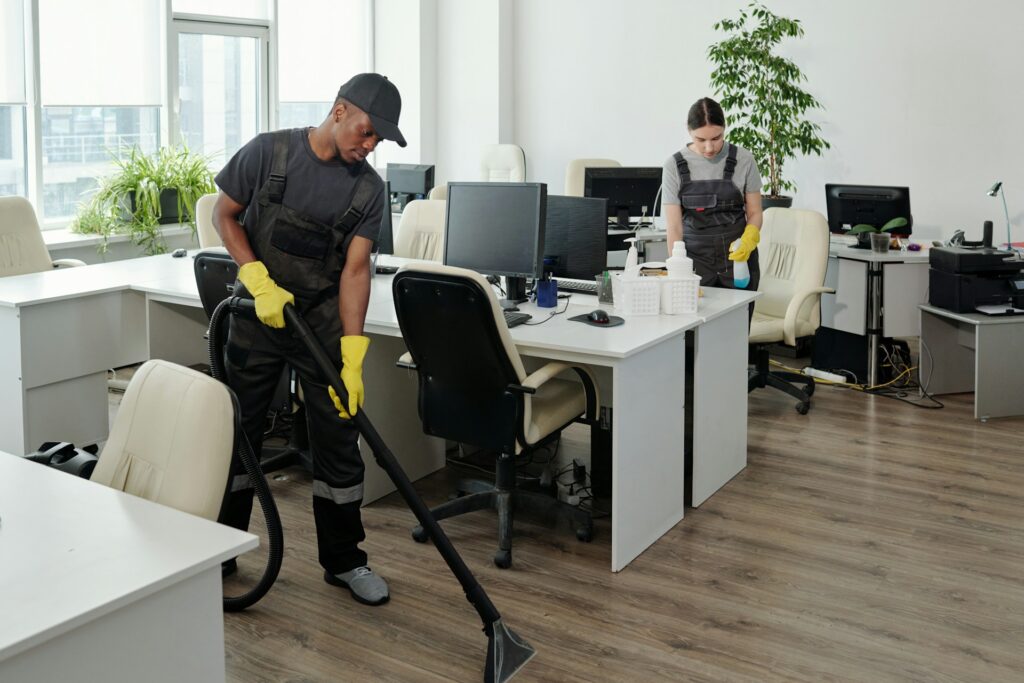
Employers have the responsibility to provide a clean, safe and healthy workplace environment for their employees. As an employer or a decision-maker, you’ll already know that a clean office isn’t just about looks. You know that a clean office os a direct contribution to employee productivity, company culture, and how clients perceive your brand.
But the question is, how do you ensure a clean office and how do you keep things clean and organized between cleaning visits?
One contributory factor is the frequency of cleaning. Most offices, especially ones with high foot traffic, should be cleaned daily or at regular intervals.
Seeing as you won’t do it yourself, you might as well know what to look for in a commercial cleaning service or a janitorial service to ensure you’re getting the best value for your money.
How Office or Commercial Cleaning Should Be Done
High-Traffic & High-Touch Areas First
These areas collect the most dirt and bacteria and should always be prioritized:
- Entryways & reception areas
- Door handles & push plates
- Light switches
- Elevator buttons
- Shared equipment (printers, copiers, coffee machines)
We recommend starting with these surfaces because they are touched dozens (sometimes hundreds) of times per day and are the primary source of germ spread in offices.
Workstations & Desks Next
With the high traffic areas addressed, the cleaning company should proceed to remove all visible waste and clutter, including papers and trash from the day. Next, the cleaners or janitors should wipe down the desks, keyboards, mice, phones, chair armrests, and other surfaces with appropriate, non-toxic disinfectants.
It is important that cleaners avoid spraying liquids directly on electronics to prevent electrical shocks or damage.
Breakrooms & Kitchens
Breakrooms, office cafes, and kitchens are often the most neglected areas in the office. This is why you’d see some coffee makers, microwaves, and other breakroom electronics looking dirty, grimy, and disgusting.
A good office or commercial cleaning company will tackle all priority areas, including countertops & tables, sink & faucet, appliances and their handles (microwave, fridge, coffee machine), and take out the trash or recycling bins.
Restrooms & Floors
A professional-level restroom clean should cover toilets, including the inside, outside, base, and flush handle; sinks, faucets, dispensers, mirrors & partitions, as well as floors and corners behind toilets.
The janitorial service should also include a refill of soap, paper towels, toilet paper, vacuum cleaning of carpets and dust-mopping of hard floors.
Daily Office Cleaning Checklist
Establishing a daily cleaning routine can significantly improve office cleanliness. Here is a checklist of essential tasks to ensure all areas are maintained:
1. Empty Trash Bins: Remove garbage from all desks and common areas.
2. Wipe Down Surfaces: Clean desks, tables, and countertops with disinfectant wipes.
3. Sanitize High-Touch Areas: Focus on door handles, light switches, and elevator buttons.
4. Vacuum and Sweep Floors: Pay attention to high-traffic areas such as corridors and the entryway.
5. Clean Restrooms: Sanitize sinks, toilets, and restock supplies.
6. Tidy Common Areas: Arrange chairs and tables, and clear any clutter in waiting rooms or break areas.
Incorporating these tasks into a daily routine can be done by assigning specific responsibilities to staff members or scheduling a professional cleaning service. Create a timetable that outlines who will handle each task and at what time. This ensures that no area is overlooked, and cleaning becomes a part of the daily work culture.
Regular adherence to this checklist keeps the office environment healthy and pleasant for everyone. It also makes deeper cleanings easier, as there is less clutter and buildup to manage. By making these efforts part of the daily routine, maintaining a clean office becomes second nature.
Deep Cleaning and Maintenance Strategies
Deep cleaning in an office setting involves more thorough and comprehensive tasks than daily cleaning routines. It includes cleaning areas that are not usually attended to on a daily basis, such as under furniture, inside appliances, and air vents. Deep cleaning not only enhances the appearance of the office but also improves air quality and reduces allergens.
To create an effective deep cleaning schedule, plan for these tasks to be done biweekly or monthly. Focus on one area at a time to avoid overwhelming the cleaning staff. Here are some tips for deep cleaning in an office:
- Carpets and Upholstery: Vacuum and shampoo carpets to remove embedded dirt. Clean upholstery to keep furniture fresh and odor-free.
- Windows and Blinds: Wash windows and dust blinds to allow more light into the workspace. Clean windowsills and tracks.
- Kitchen and Break Rooms: Clean inside refrigerators, microwaves, and other appliances. Sanitize countertops and cabinets.
- Restrooms: Deep clean toilet bowls, sinks, and floors. Replace old air fresheners and ensure exhaust fans are working properly.
- Workstations and Desks: Clean under and behind desks, wipe down computer monitors, keyboards, and telephones.
Implementing deep cleaning ensures that every part of the office is maintained, promoting a healthier environment for everyone.
Using Eco-Friendly Products in Offices
Using eco-friendly cleaning products in offices has numerous benefits, from reducing environmental impact to improving indoor air quality. Eco-friendly products are typically free from harsh chemicals, making them safer for employees and the environment.
“Using eco-friendly cleaning solutions not only protects our planet but also ensures a healthier workspace for employees,” says Boris.
Eco-friendly cleaning products are made from natural ingredients and are biodegradable. They do not leave behind harmful residues or contribute to indoor pollution. Examples of eco-friendly products suitable for office use include:
- All-Purpose Cleaners: Products like vinegar-based or citrus-based cleaners can be used on multiple surfaces.
- Window Cleaners: Simple solutions of water and vinegar can leave windows streak-free.
- Disinfecting Wipes: Biodegradable wipes made from natural fibers are perfect for quick cleanups.
- Floor Cleaners: Plant-based floor cleaners keep floors clean without toxic chemicals.
Incorporating eco-friendly products into your cleaning routine can be as simple as selecting brands known for their natural ingredients. Not only does this practice support sustainability, but it also ensures a safer and healthier office environment.
Office Cleaning Made Easy: Strategies for a Healthier Workplace
Maintaining a clean and orderly office requires a combination of regular cleaning routines, thorough deep cleaning, and the use of eco-friendly products. A clean office space boosts productivity, reduces the spread of germs, and creates a welcoming atmosphere for both employees and clients. Keeping up with daily and deep cleaning tasks ensures all areas are consistently maintained, promoting a healthier work environment.
Boris highlights the importance of using green cleaning products, stating, “Eco-friendly products are crucial for a healthy workspace and a healthier planet. These practices not only benefit the office environment but also contribute to global sustainability efforts.”
Effective office cleaning strategies can make a significant difference in the overall efficiency and atmosphere of your workplace. For professional assistance and to ensure your office remains spotless, consider reaching out to VepoClean (EcoPure) Home Cleaning Jersey City.
Their experienced team is dedicated to delivering top-notch office cleaning services tailored to your needs. Contact VepoClean today at (917) 848-9912 to schedule a consultation and experience the difference a clean office can make!